Motor-vibrator feeders
Motor-vibrator feeders compete successfully with electromagnetic feeders and operate in a far-resonant mode, which increases the stability of their operation. Unlike electromagnetic feeders, they have rotating parts that require maintenance — which is why the reliability and service life of the motor-vibrators matter so much.
We use both Russian-made and imported motor-vibrators. Recently we mostly use imported (Italian) motor-vibrators: they cost more than domestic ones but offer a significantly longer service life.
- Compete successfully with electromagnetic feeders on operating stability
- Easy integration with frequency drives for smooth speed control
- Parameters and size are engineered individually for your task
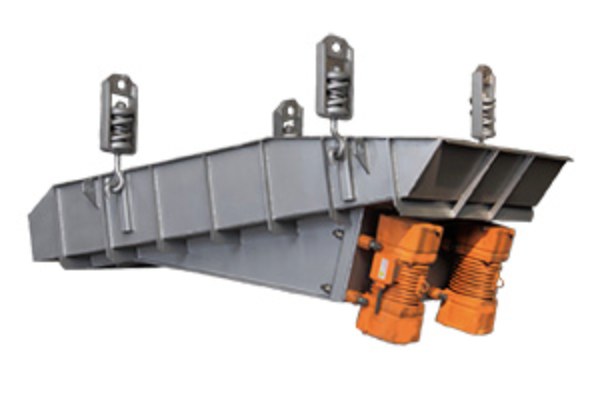
How does an electromagnetic vibrating feeder differ from a motor-vibrator feeder?
An electromagnetic drive has no rotating parts and needs almost no maintenance; a motor-vibrator feeder runs in a far-resonant mode and gives a more stable feed when material properties vary.
The VEM electromagnetic drive is adjusted smoothly from zero to maximum by changing coil voltage through a control cabinet or unit — it has no bearings or brushes to wear out the way a rotating-unbalance drive does. A motor-vibrator, by contrast, has rotating parts that need bearing care, but its far-resonant operating mode holds amplitude more steadily when bulk density and moisture vary — useful on large, heavy units handling material with wide property swings. The right drive is chosen individually for the task: material parameters, the feed stability required, and the maintenance budget are confirmed when you place a request.
Fill in the material parameters and required capacity — this lets us size a model and quote it faster and more accurately. Download PDF →